
Percy Julian, "The Four-Way Test to Me"
- 1962

These captions and transcript were generated by a computer and may contain errors. If there are significant errors that should be corrected, please let us know by emailing digital@sciencehistory.org.
Transcript
00:00:00 At the beautiful Crystal Room of the Hilton Inn in Aurora, Illinois, where hundreds of
00:00:09 Rotarians have been dining and meeting during the 48th Annual District 644 Conference of
00:00:15 Rotary International.
00:00:17 Governor Sandberg called today's meeting to order at 12.30 p.m.
00:00:21 Invocation was offered by Reverend O.B.
00:00:23 Moore of Batavia, and music was rendered by Sid Crofts of Batavia.
00:00:29 The featured speaker this afternoon will be the renowned Dr. Percy Julian, President
00:00:34 of Rotary Club, Franklin Park, Illinois.
00:00:37 The next voice you will hear will be that of John Sengstacke, introducing this afternoon's
00:00:44 speaker.
00:00:45 Thank you, Governor Sandy, distinguished guests, Rotarians, ladies and gentlemen.
00:01:08 Introducing a great man always presents some difficulties.
00:01:15 For one thing, all praiseworthy references to him, however couched in careful rhetoric,
00:01:28 never seem to do justice to a brilliant career.
00:01:35 And for another, it would take a longer time than I am permitted to enumerate all the high
00:01:44 honors and distinguished awards that have come to our speaker.
00:01:55 I shall therefore refrain from taxing your patience and goodwill by not unduly making
00:02:08 my remarks lengthy.
00:02:12 There's another impelling reason why I shall be brief.
00:02:20 I don't think there is any question or any doubt about the dedication of Dr. Percy Julian
00:02:29 to Rotary.
00:02:31 He flew in this morning from Phoenix, Arizona after hearing that his daughter was ill in
00:02:39 California and he must leave immediately after this meeting to catch a plane to meet his
00:02:49 wife and family in California to see his daughter.
00:02:57 You know, ever since the Industrial Revolution, science and the scientists have consigned
00:03:06 their energy more and more toward the advancement of modern society than they did during the
00:03:15 Middle Ages.
00:03:18 Although the laws of modern physics govern much the application of atomic energy, chemistry
00:03:27 shall long remain within the structural framework of the use of atomic energy as an industrial
00:03:36 commodity.
00:03:39 After all is said and done, there are two principles which govern modern science.
00:03:47 Preservation of energy and conversion of energy.
00:03:52 My friends, today we are in the presence of a genius who has concentrated his mind and
00:04:00 energy toward the extension of those principles which are indispensable to the preservation
00:04:07 of man in a dynamic society.
00:04:12 After his graduation from DePaul University, where he received his Phi Beta Kappa key,
00:04:20 Dr. Julian went to teach at Fisk University for two years before he was awarded the Austin
00:04:28 Fellowship which took him to Harvard University where he did his postgraduate work.
00:04:37 He then went to the University of Vienna from which institution he received his Ph.D.
00:04:44 degree under the grant of the General Educational Foundation.
00:04:51 He returned to DePaul, his alma mater, as a member of the faculty of the Department
00:04:57 of Chemistry.
00:04:58 He gave up teaching to become Research Director of Soya Products of the Glidden Company where
00:05:07 he made some startling discoveries in the utilization of the soybean as a therapy in
00:05:17 certain diseases.
00:05:20 He holds active membership in a number of scientific societies and has been awarded
00:05:26 the coveted degree of Doctor of Science.
00:05:31 In 1947, he became the 32nd recipient of the Spingarn Award which was presented to him
00:05:40 by the National Association for the Advancement of Colored People for his brilliant contributions
00:05:47 in the field of chemical research.
00:05:50 Our distinguished speaker is Vice President of Providence Hospital, Board of Trustees,
00:05:57 and Roosevelt University.
00:05:59 He's on the Board of Directors of the Urban League, the National Conference of Christians
00:06:04 and Jews, the Chicago Theological Seminary, and a member of the advisory board of the
00:06:12 Chicago Welfare Administration and the Chicago City Club.
00:06:17 A few years ago, he was elected to the membership of the Howard University Board of Trustees.
00:06:26 And as you know, and needless to mention, he is President of the Franklin Park Rotary
00:06:31 Club.
00:06:32 Dr. Julian is one of the few scientists who had enough business acumen to protect his
00:06:41 contributions.
00:06:44 It is my pleasure and honor to present to you our distinguished Rotarian, President
00:06:52 of the Julian Laboratories Incorporated, the eminent Dr. Percy Julian.
00:07:17 Director, Dr. Salsberg, Governor Sandy.
00:07:25 Governor nominee Dick Longton, distinguished past district governors,
00:07:34 most appreciated international Rotary students,
00:07:42 beautiful Rotarians,
00:07:47 friends throughout the masses of you, ladies and gentlemen.
00:07:51 I never know how to feel and I, as long as I live, to hear introductions of the type that
00:08:00 John, and thank you John, gave to me. I see one of my dear friends from my club here who's
00:08:08 sitting expecting a story that he has heard before, but I'm going to tell it just the same.
00:08:15 Of course, it's a true story. When I was a boy, we were Methodists. I might add
00:08:22 inferentially that since then we rise up in the world and we've become Congregationalists.
00:08:32 I also might add that you know that a Congregationalist
00:08:35 is a Methodist who's learned to read.
00:08:37 It was our want in those days to come home from Sunday school and bring home what they call then
00:08:51 the golden text of the Sunday school lesson. Oh, that was in the dark days. I suppose all of you
00:08:56 are too young to remember that. But on that particular Sunday, the golden text had been,
00:09:00 it is I, oh be not afraid, saith the Lord. An adaptation of the scripture.
00:09:09 It was my day at the dinner table to give the golden text, but I had stopped to play a little
00:09:14 baseball on the way home and had forgotten it. My father sitting at the head of the table
00:09:19 looked over at me without a word and said, well, and my mother was sitting on the right of me at
00:09:25 that time. She was sort of close up to father to help with the serving and I was next to her
00:09:33 and the other children were looking at me and I scratched my head and I said to mother, mommy,
00:09:40 I've forgotten it. She said, just calm yourself, you'll remember it. And I searched through the
00:09:46 subterranean channels of my memory to try to find this golden text and I just simply couldn't do it.
00:09:52 But all of a sudden it came out and I said, oh, I remember it, mommy.
00:09:56 Oh, I remember it. I remember it. I remember it. And I said, it was,
00:09:58 don't be scared. It ain't nobody but me.
00:10:09 Well, I'm going to talk to you today about some of the philosophical implications of the four
00:10:15 cornerstones of the basic faith of Rotary as I have seen them and as it has been my privilege
00:10:22 over the past four or five years to live them with other Rotarians through Europe,
00:10:28 from one end of Israel to the other. I brought back banners to my club
00:10:33 and I brought them from many towns in Italy and I've stolen a few in Europe and I've stolen a
00:10:39 few of them for myself whenever I could get an extra one to keep. Make no mistake about it,
00:10:46 Rotary has become an image for the entire world. Also make no mistake about it,
00:10:54 history will record it as one of the great miracles of the 20th century that here in the
00:11:00 Midwest where our concept of our fair country was one of an island, an isolated island,
00:11:09 that could develop itself into an isolated arsenal if necessary for its own protection
00:11:14 and its own security. Here in this Midwest spirit of isolation, history will record it as
00:11:23 a marvel that a few men sat down and had the genius to look two decades or three decades
00:11:30 or a bit more ahead and to see a world change from geographical concepts of little isolated islands
00:11:39 and to see the nations, all of them of the world, harnessed into a geocentric system
00:11:47 of appalling intimacies.
00:11:52 There is no such thing as an island among the nations of this world today
00:11:58 and Rotary has been largely responsible for a great change in that concept coming as it did
00:12:06 out of a community that has been famed for a concept of isolation. Rotary has become an image
00:12:17 like all great institutions it adhered to the doctrine of man that he was safest if he stood
00:12:23 on his all fours and so they had the good sense in the early days to sound out four basic
00:12:32 cornerstones for the faith. You've heard this four-way test talked about so much that probably
00:12:40 it has become trite to you. I want to look at it today and have you look at some of its philosophical
00:12:46 implications if you will allow me to be serious from the standpoint of science. Now I know some of
00:12:52 you may groan when you hear that because our language, the language of the scientists, doesn't
00:12:57 lend itself to poetry. Ladybird, ladybird fly away home becomes impossible when you must call the
00:13:03 ladybird coccinella de putata and a primrose by the river's brim, a yellow primrose was to him
00:13:12 loses all of the flavor of Wordsworth when the primrose becomes a specimen of primula vulgaris
00:13:19 and yet despite that I would like to call your attention to the fact that it was just little
00:13:24 more than 100 years ago when one of the great scientists of his day made the pronouncement
00:13:30 in writing that all of the great and fundamental discoveries of science had been made
00:13:35 that it only remained for future generations to refine these discoveries
00:13:40 and adapt them to our practical needs. Yes this skeptic, skepticist said that man had
00:13:49 reached the zenith of his capacity for exploring the fundamental unknown
00:13:57 almost as if God himself had been angered by such arrogant skepticism and such lack of faith
00:14:04 in the vastness of our universe. There descended upon this pronouncement an avalanche
00:14:10 of the most glorious discoveries that have ever been credited to the human intellect
00:14:15 for hardly had the ink dried upon the words of this skeptic, skepticist that Michael Faraday drew
00:14:22 virtually a living spark from the lifeless magnet and Daniel Groban Bunsen following
00:14:28 close upon the heels of Faraday's discovery gave us an enduring source of electrodynamic power.
00:14:34 Giant cranes came into being and machines of that type that virtually lifted the physical
00:14:39 burdens of the ages from the backs of mankind and ohm in Germany before the ink had dried upon
00:14:45 this skeptical announcement taught us how to measure such a huge electrodynamic power
00:14:50 when obtained. Yes in a realm almost bordering upon the aesthetic Bessel detected the parallax
00:15:00 Bessel detected the parallax parallaxes of the fixed stars just after the scientist had written
00:15:07 his words and Adams and Le Verrier threw their grapples out into space and felt the influence
00:15:14 of an unseen and hitherto unknown planet Neptune trembling along the delicate lines of their
00:15:21 analyses. Draper, Deguerre and Talbot just about the same time discovered the wonders of actinism
00:15:31 and gave us the new science of photography and we cannot forget another thing that points to
00:15:40 the aesthetic. Agassiz in Italy rode down the Alps upon the backs of the glaciers and proved
00:15:46 their steady flow just as this skeptic had written the words that we were all washed up
00:15:54 with our capacity and our capacity to explore the fundamental unknown.
00:16:00 Darwin just about that time lifted the veil from the mysteries of organic development
00:16:07 in his theory of evolution. I like to think of another quiet man who was working just about
00:16:13 that time and who went out one afternoon in his garden in a beautiful English countryside Stokes
00:16:19 was his name. He looked at a rainbow after a refreshing rain and as he looked at the rainbow
00:16:25 from the red to the violet end of the rainbow he simply stood wondering to himself what became
00:16:31 of yonder violet as it faded into the invisible. And lo with this dream Stokes started himself
00:16:42 on research that led to the ultraviolet beyond the violet and blessed us with the sunshine vitamin
00:16:49 vitamin d3 which we happen to manufacture in our laboratories no commercial
00:16:57 and we manufactured because it is necessary for your betterment for a hen that used to a good
00:17:03 Leghorn hen that used to lay you 150 eggs a year and was considered to be a pretty good hen at that
00:17:09 now lays you 300 eggs a year because of vitamin d3 that we must feed to her
00:17:17 all because Stokes gazed at a rainbow
00:17:23 No, because Stokes had the courage to dream as we all must do of better things in the days yet to
00:17:32 come and in our own country hardly had the ink dried upon the words of the skeptic
00:17:41 before Edison Thomas Edison in his laboratory one day was heating a piece of metal
00:17:46 and as he heated this piece of metal to high temperature all of the electrical
00:17:49 instruments in his laboratory began to dance about
00:17:52 back and forth and Edison noticed that his laboratory was charged with electricity
00:17:57 historians and as you probably have seen I spend a great deal of my time in the history of science
00:18:03 is because because there I find the individuals and what has made them tick and I find out
00:18:11 whence they have received their inspiration the historian of science records that this was one
00:18:16 of the few discoveries that Edison ever made frankly some say it was the only great discovery
00:18:24 some say it was the only great discovery that he ever made all of the rest of them were inventions
00:18:31 utilizing the fundamental discoveries of others which certainly does him no discredit at all
00:18:38 namely that hot bodies give off electricity and this was the way he published it in a very simple
00:18:44 little three or four lines in the journal of the franklin institute some years uh that year
00:18:49 I have discovered that when you heat a piece of metal to high temperature it gives off electricity
00:18:58 no one thought anything about it few people read it except one German
00:19:02 Röntgen read it and as he read it he said why this piece of metal heated to high temperature must be
00:19:11 giving off fast electrons fast moving electrons and so what did Röntgen do he went into his laboratory
00:19:18 and put a piece of tungsten here and another piece here
00:19:22 perpendicular to it he heated the first piece of tungsten it gave off the fast moving electrons
00:19:28 that Edison had discovered bombarded the second piece and when Röntgen looked at his second piece
00:19:32 of tungsten his eyes saw the most peculiar rays and what had he done he had given to us the x-ray
00:19:40 enabling our eye to see where hitherto we had not dreamed it would
00:19:47 and more than that Edison had if you please written the first chapter in the history of the atom bomb
00:19:57 for he had bombarded
00:20:02 a piece of tungsten with a disintegrated tungsten with another disintegrated tungsten that had given
00:20:09 off electrons lost its electrons from its atomic structure these had bombarded the atomic structure
00:20:15 of the second piece of tungsten and it knocked out of it a part of its radiating energy
00:20:26 and when Becquerel read in France of Edison's discovery
00:20:36 Becquerel gathered a little insight greater insight into the nature of this pitch blend
00:20:41 that he had from mountainous Czechoslovakia from which he had insulated uranium
00:20:48 mark you very carefully for Rotarians should always mark this part of science this uranium
00:20:55 known to science largely because a poor Russian lad Mendeleev had struggled up through the
00:21:01 University of Moscow and out of the brilliance of his intellect he had harnessed the wayward
00:21:06 masses of the atoms into a system of periodicity
00:21:12 leaving a blank space which one day uranium was to fill and now Becquerel had it this uranium
00:21:19 predicted by Mendeleev he wrapped a photographic plate up in a piece of black paper and placed it
00:21:25 near a piece of this uranium suspecting that this uranium was spontaneously giving off
00:21:34 radiation which Edison had forced through the bombardment with electrons
00:21:39 and when he unwrapped the photographic plate just a few hours later it was as black as if
00:21:44 it had been exposed to the direct rays of the sun and Becquerel had written another
00:21:50 significant chapter a second chapter in the history of the atom bomb and then came along
00:21:56 that gallant pair working in a laboratory attic Pierre and Marie Curie and read of Becquerel's
00:22:01 work just as Röntgen had read of Edison's work and Marie Curie knew exactly where to go and
00:22:09 look for her radium and she went to this same pitch blend from mountainous Czechoslovakia at
00:22:14 that time and there she found it and gave to science not only the first remedy concrete remedy
00:22:21 against the malady of cancer but gave to us a whole new science of protons electrons and alpha
00:22:28 particles all particles charged with electricity subject to the magnetic deflections of the
00:22:35 electrodynamic field of Faraday and Bunsen and Marie Curie had written a third chapter
00:22:45 in the history of the atom bomb and then came along Rutherford who read of the Curie's work
00:22:51 and who commented at length upon the brilliance of the work of Marie Curie
00:22:56 in establishing the radiation in the form of electrons alpha particles and protons
00:23:01 being given off from uranium and radium and Rutherford decided to take our alpha particles
00:23:07 which were particles of some size and of tremendous energy and he decided to bombard nitrogen with
00:23:13 them he put them up into closed tube and bombarded the nitrogen with Marie Curie's alpha particles
00:23:19 and split the atom of nitrogen into an atom of hydrogen and an atom of oxygen at the beginning
00:23:26 of the 20th century a little afterwards and Rutherford had accomplished something that
00:23:33 chemists had dreamed and physicists had dreamed about constituting a fourth chapter and a very
00:23:39 vital one in the history of the atom bomb and then the years roll on while the words of the
00:23:46 skeptic that we were all washed up with our capacity to explore the fundamental unknown
00:23:51 were echoing vainly in the ears of some men and there comes along Irène Curie the daughter of
00:23:59 Marie Curie and her husband Joliot also working in Paris but under better circumstances than her
00:24:05 parents and there she looked again after she noticed Rutherford's work she looked again at
00:24:10 the beloved uranium and radium of her mother and there she found something which her mother's eyes
00:24:16 had not seen as children do improve upon the vision of their parents and their fathers
00:24:22 she found particles which were not electrically charged not deflected this or that way
00:24:28 by the electromagnetic fields of parity but particles which went straight to their target
00:24:33 neutrons and with this it only remained for Fermi and the others to put this knowledge together
00:24:42 and bring out of it what shall you say the monster that fell upon Hiroshima and Nagasaki
00:24:51 nay more than that it brought out the truth of the ages
00:24:59 that the skeptic had tried to discount as possible there are innumerable lessons
00:25:08 in this chronology of genius at work with which I bore you today to some extent first of all
00:25:15 let me draw a few that relate to our four cornerstones of faith in Rotary
00:25:25 it spells defeatism to that kind of skepticism that would bottle up this vast universe
00:25:31 and even God as were the genii of old I heard as a student at Vespers many years ago I remember
00:25:38 I heard Harry Emerson Fosnick tell a story of a minister who went into his study one day and
00:25:42 found his little daughter Anne busy busily sketching something on paper and he said to
00:25:47 her Anne what are you drawing and she answered him and said daddy I'm drawing a picture of God
00:25:54 but Anne no one knows what God looks like
00:25:56 well she answered they will when I'm through
00:26:02 laughable as that is it is the people with the mentality of Anne
00:26:06 who make for the trouble for us in this world they cannot conceive of the vastness of the
00:26:13 universe in which they live they cannot conceive of the vast vastness of human possibilities
00:26:20 vastness of human possibilities in the universe in which they live
00:26:27 they cannot see the future in all of its glory and its hope they cannot conceive of the yearnings
00:26:35 of mankind towards ceaseless progressive and aggressive change they cannot conceive of all
00:26:45 of this because they cannot reconcile it with their man-sized God thus theirs is of necessity
00:26:55 a devotion to half of the truth theirs is of necessity a devotion to this or that side of the
00:27:02 truth theirs is a devotion to the mere husks and rhymes of good a devotion that is the very opposite
00:27:13 to the cardinal first of the four-way test the truth the whole truth and nothing but the truth
00:27:28 you have often heard the story of the man who lost his house key and as he went around the
00:27:34 block looking for his house key the policeman finally found him out under the light looking
00:27:40 for it here and there and a policeman graciously joined him and they looked the policeman down on
00:27:45 his knees and finally after searching all over the place there under the light he said to the
00:27:52 man are you sure you lost your key here oh he said no I didn't lose it here I lost it over there
00:28:00 he said well for heaven's sakes and what are we looking here for
00:28:04 he said because there's no light over there
00:28:12 it's easy for us to look for truth where we know full well we cannot find it to look for it where
00:28:21 there is light instead of to look for it where there is darkness one of the little known poems
00:28:29 of Longfellow says where should the scholar live in solitude or in society
00:28:38 in the green stillness of the country where he can hear the heart of nature beat
00:28:42 or in the dark gray town where he can hear and feel the throbbing heart of man
00:28:50 I'll make answer for him says Longfellow in the dark gray town
00:28:59 and a second lesson is like unto the first suppose someone had come into Edison's laboratory
00:29:07 and ask him Mr. Edison what is the use of this discovery that hot bodies give off electricity
00:29:13 well if Edison had said well what's the use of a newborn babe I don't know
00:29:18 they might have thought that he was reaching his dotage because he was
00:29:21 celebrated for making use of things and yet Edison could have answered him firmly out of
00:29:29 his experience in one way this is not only a part of the truth revealed but it is right
00:29:39 because the search for truth my dear young man
00:29:42 is and always must be synonymous with the search for goodness
00:29:47 and therefore if the first
00:29:52 command of the four-way test ask is it the truth
00:29:59 it means that it is goodness at the same time and this faith we must always have
00:30:08 and then there is a third lesson that corresponds to a third pillar of the Rotary faith
00:30:17 if you will pardon me I will use a personal illustration for this is it fair to all concerned
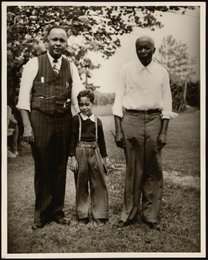
00:30:26 and the picture I have before me as I talk about this is a picture
00:30:34 of the three generations that stood in a little railroad station in Montgomery Alabama when I was
00:30:39 being sent off to college I can see that picture before me now as clearly as if it were yesterday
00:30:45 yesterday and yet it was many years ago there stood my little great-grandmother
00:30:51 waving her hand wrinkled with its 99 years
00:30:57 well I the tears almost come to my eyes when I think of Grandma Patsy I was proud of her because
00:31:03 she was the only woman in the state of Alabama who could pick over 300 pounds of cotton a day
00:31:10 that was for me the greatest accomplishment because I tried my very best and as much as
00:31:14 I could ever get was 150 pounds and I used to say Granny how do you do it
00:31:21 and I used to remember her answer very often down the years when she said
00:31:25 well sonny I've trained my hands to work in harmony with my mind
00:31:34 there beside her stood my paternal grandfather and my paternal grandmother
00:31:38 and there beside them stood my mother and father I'd never been to high school
00:31:45 and how was I going off to college I'd never been to high school mark you my friends because there
00:31:49 was no high school for Negro children in Montgomery Alabama the capital of Alabama
00:31:55 I was born at the corner of Jefferson Davis Avenue and South Holt Street
00:32:00 so I think I'm very much southern at any rate but there was no high school for Negro students
00:32:06 and that day the first high school for Negro students in Montgomery Alabama was established
00:32:10 in the 1930s and it was a Catholic high school named after the saint of all poor people Saint
00:32:18 Jude it was some years before the state of the city ever founded established a high school there
00:32:25 so I had been taught by my mother and father and by tutors and had taken a few courses in a little
00:32:31 mission school that had been established by a Scotsman for teachers and there I had met
00:32:36 a DePaul Unversity woman who was responsible for my interest in DePaul University my father
00:32:43 she'd been my father's teacher years before and it incited his interest in DePaul
00:32:49 and so I'd taken examinations at DePaul and Amherst which they let me do in those days and
00:32:54 I had been admitted to the two schools and I was going off to DePaul where my father wanted me to
00:32:59 go and there they were standing at that station three generations of hope and prayer
00:33:08 waving a fourth generation off to college and why because they had the undying faith
00:33:16 that the best hope and the best promise for the last best hope of earth
00:33:23 is the education and fair play for all the people
00:33:31 all the people of this nation and all of God's children throughout the world
00:33:41 and lastly
00:33:42 does it generate goodwill this deed of Rotary of a Rotarian
00:33:54 I'm going to tell you a little story that iI feel disgraced at
00:33:58 because we always feel disgraced to see how narrow-minded we have been
00:34:03 and I was on this particular occasion narrow-minded that is on this particular
00:34:10 occasion I was looking back into the past rather than following the
00:34:16 injunctions of my science to look always toward the future a group of men
00:34:23 one or two of them who are here today from my own Rotary Club came to see me one day
00:34:29 and they said doctor our program committee wants you to speak to Rotary
00:34:33 our Rotary Club in Franklin Park
00:34:40 I had been a student thank you
00:34:46 I was a student of Vienna when the Rotary International met there 1930 or 1931
00:34:51 I forget which year exactly now and I had many fellow students ask me
00:34:57 uh won't you meet many of your friends here
00:35:01 and I remember as an angry young man in that day and time
00:35:06 I said there won't be any of my friends here because all of the Rotarians here are white people
00:35:14 and I will hardly find many friends among them
00:35:20 I thought about that many years later I thought about it some years later
00:35:24 when the directors of my company the Glidden Company at that time for which I worked
00:35:27 always took me to the Lion's Restaurant on North Avenue for dinner and they didn't know it but but
00:35:32 the people in the kitchen always salted my food so that I couldn't eat it but I sat there and
00:35:37 made out as if I would eat because I was determined that no man in the Glidden Company should ever say
00:35:44 that we cannot hire a Negro lad because he can't get along and he will have trouble yes I slept
00:35:50 in my automobile at least 50 nights out of every year in the cold of Wisconsin and the cold of
00:35:57 Michigan and the cold of your whole state of Illinois because there was in that day not even
00:36:03 the even the Stevens Hotel it's now the Conrad Hilton refused to let me have a room when I had
00:36:09 two papers on the American Chemical Society program in 1935 and there was no room for me
00:36:16 in southern Illinois nor in Michigan nor even in Milwaukee I got one night to the to the Nina
00:36:22 Inn right outside of Appleton Wisconsin sent there by my company on a paper mission I went in with
00:36:28 the lawyer with the patent lawyer for my company the Glidden Company and we I climbed in and out
00:36:33 of the paper beaters all day long writing up this patent for the Glidden Company on the sizing
00:36:39 of paper came back to the Nina Inn the next night I'd spent the night before there and when I got
00:36:45 back the next night why the uh the lawyer the patent lawyer friend of mine said to me let's
00:36:50 stay overnight uh here let's all drive back to Chicago tonight I'm beaten and I said I'm pretty
00:36:56 tired too I guess we will the uh clerk met me at the desk and he said he handed my friend
00:37:05 a patent lawyer who had gone with me his key and he said to me you'll have to check out
00:37:10 well I said why how come I knew well how come because that was the first time I'd ever stayed
00:37:15 in a hotel in Wisconsin and he said well when you came in last night the lights were dim and
00:37:22 we thought you were an East Indian but this morning when you came into breakfast we found
00:37:27 you were a Negro and you will have to check out
00:37:29 and so with these experiences in mind in mind when my friends came from Franklin Park Rotary Club
00:37:39 asked me to speak to them I replied promptly well gentlemen you know how much I I I think
00:37:44 of all of you I've met all of you I don't speak to Rotary Clubs
00:37:51 and I think Dave Davis whom I saw come in here a little while ago looked up at me and said
00:37:56 why so I said I said well it's very simple I have never been able to answer satisfactorily
00:38:01 for myself why there is has never been a Negro service-minded enough civic-minded enough
00:38:12 sound enough character and with sufficient business business acumen never to be admitted
00:38:20 and with sufficient business business acumen never to be admitted to Rotary and since I'm
00:38:25 not in the entertainment world I don't speak to Rotary Clubs now a few of my friends here know
00:38:30 how viciously frank I am uh and so I hope you will pardon my telling you it just as it happened
00:38:36 although I'm not proud of it one man in the bunch Jim Kerry of curious restaurant said
00:38:42 uh in a very famous restaurateur he said well if there's anything in the Constitution
00:38:46 which prevents it they've lost one member and I began to think after they left now wait a minute
00:38:53 I put my foot into something now because sure enough 10 days later they came back
00:38:58 and told me that I had been unanimously elected
00:39:04 to present myself as a candidate for membership and role well there's nothing more you can do
00:39:12 even if you haven't aspired to be a Rotarian than to give it a trial when men actually dare
00:39:19 and these men had gone into at length they had called Rotary International Rotary International
00:39:24 to said to him it's never been done but there's nothing against it and if you want to take the
00:39:29 chance it's just never been done and so i told the story to the Chicago Rotary Club and I said
00:39:35 to the Chicago Rotary Club that invited me to speak there some years later that we shall you
00:39:40 shall never contribute adequately adequately to the glory of our great democracy until you realize
00:39:47 that just that all men must not only repeat the words of the four-way test but they must go about
00:39:54 over this sad world taking the hands of the trembling children of this earth and walking
00:40:01 with them the paths to peace
00:40:07 and the proudest scientist knows that we must become so humble and we must be endowed with such
00:40:16 intelligent humility that we see not ourselves in those whom we choose to walk with
00:40:26 but we see the trembling yearning hopeful children of this earth
00:40:33 and if he be wise he will remember that in the bowels of mother earth nature has been carrying
00:40:40 on atomic disintegration down the ages he will remember that in the sun which rises on tomorrow's
00:40:46 horizon nature has been conducting atomic disintegration down the untold ages
00:40:56 and if he remembers that and he walks beside a pond and sees a little lily bursting into bloom
00:41:03 and bringing beauty which he could never create he will stop and ponder that ancient command to
00:41:10 humility and command to goodwill consider the lilies of the field they toil not neither do
00:41:19 neither do they spin and yet Solomon in all his glory was not arrayed like one of these
00:41:50 and so we have heard a most stirring and challenging address from the heart of a
00:42:01 great scientist and Rotarian Dr. Percy Julian his address was entitled The Four-Way Test To Me
00:42:10 well this afternoon's conference program continues with the Rotarians to go on a trip through
00:42:16 Moussard then later on this afternoon the Extension Committee will report
00:42:22 Dr rather E.D. Gifford chairman of the Grange President John Cool of Oakbrook Secretary
00:42:29 George McCurn of Oakbrook President Charles Shannon of Mont Prospect and Secretary JC
00:42:36 Buesenhart of Mont Prospect will meet at 2:40 there will be a panel and club projects
00:42:43 with audience participation will take place at 3:10 intermission for coffee and then at 3:25
00:42:52 will be a program called "Our Students" at 4:10 there will be a panel the subject "what's on your
00:43:00 mind" this will be an audience participation program then at 4:30 there will be announcements
00:43:06 and adjournment this evening's program we'll have Rotary fellowship around the
00:43:12 punch bowl at six o'clock at 6:30 there will be a call to order by Dr C.O. Sandberg
00:43:19 the district governor and then the highlight speaker of this evening will be
00:43:27 uh Dr. rather Dr. Walter Judd he'll be introduced by Delbert Judd President of the Kankakee
00:43:34 Rotary we must include of course the fact that the Swedish glee club will present their music
00:43:41 also this evening and so the audience discourses will go on to interesting
00:43:49 events continued and planned for the rest of the day
00:43:52 the meeting is adjourned let's move people real fast ladies get out and get in the buses come back and be with us soon
In this address to the 48th annual meeting of District 644 of the Rotary Club (northeastern Illinois), chemist Percy Julian reflects on moral code of The Four-Way Test and how it can be applied to scientific discoveries and progress.
| Property | Value |
|---|---|
| Creator of work | |
| Place of creation | |
| Format | |
| Genre | |
| Medium | |
| Extent |
|
| Language | |
| Subject | |
| Rights | In Copyright |
| Rights holder |
|
| Credit line |
|
Institutional location
| Department | |
|---|---|
| Collection |
Related Items
Cite as
Rotary International. District 6440 (Illinois), and Percy Lavon Julian. “Percy Julian, ‘The Four-Way Test to Me.’” Open reel audiotapes, 1962. Percy Lavon Julian Papers. Science History Institute. Philadelphia. https://digital.sciencehistory.org/works/w3yr7rd.
This citation is automatically generated and may contain errors.