
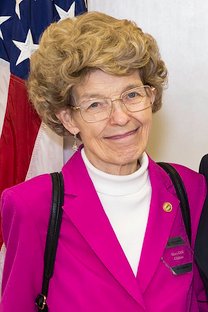
Research Interview with Mary-Dell Chilton
- 2013-Aug-29 – 2013-Aug-29
Research Interview with Mary-Dell Chilton
- 2013-Aug-29 – 2013-Aug-29

Mary-Dell Chilton was born in 1939 in Indianapolis, Indiana but grew up with her maternal grandparents in Southern Pines, North Carolina. She went to Catholic school where she excelled academically. After she became a teenager, Chilton moved back in with her family. She continued to do well in school, particularly in mathematics and science. When she was seventeen years old, she built a Cassegrain telescope as part of a science talent search run by Westinghouse. After graduating from high school, she attended the University of Illinois, initially intending to become a physics major but quickly transitioned to chemistry. Chilton stayed at Illinois for graduate school and took a course that changed her life and career, “The Chemical Basis of Biological Specificity,” taught by luminaries in molecular biology. The course sparked her lifelong interest in biotechnology. Midway through her graduate career, she moved to the University of Washington with her thesis advisor, Benjamin Hall, and earned her PhD from Illinois in absentia. She became a postdoctoral fellow at the University of Washington and later a temporary lecturer after her second son was born. While teaching, Chilton learned about the unusual claims surrounding Agrobacterium from one of her students, Thomas C. Currier, and learned Eugene W. “Gene” Nester was working on a grant application to study crown gall disease. She wrote the grant application and started a new position at Washington when the grant was funded. In that new role, Chilton began studying Agrobacteriumand discusses in detail the discoveries the lab made in the interview. She talks about doing brute force experiments with everyone in the lab over the weekend to learn more about Agrobacterium.
In 1979, Chilton left Washington to become an associate professor of biology at Washington University in St. Louis due in part to some conflict with Gene Nester. Once at Washington University, Chilton began focusing on the disarming of the tumor-inducing plasmid, which led to success with transgenic plants in 1983. She talks about attending the crown gall conferences, competition with other scientists and labs, and the Miami Winter Symposium. In 1983, Chilton moved from academia to industry when she took a position at Ciba-Geigy focused on getting Bt to work in plants and transforming corn and soybeans. Chilton moved up in the company and transitioned to more of an administrative role, although she preferred doing experiments—the work of a scientist. She got her wish in the 1990s when Ciba-Geigy became Syngenta, and she became “a molecular biologist again,” in her words, with a focus on big plasmids. As transgenic plants began to hit the market in the 1990s, Chilton talks about the GMO controversy. She concludes the interview by talking about her more recent work like gene stacking, the World Food Prize, and her desire for transgenic technology to be embraced.
| Property | Value |
|---|---|
| Interviewer | |
| Interviewee | |
| Place of interview | |
| Format | |
| Genre | |
| Extent |
|
| Language | |
| Subject | |
| Rights | In Copyright |
| Rights holder |
|
| Credit line |
|
About the Interviewer
Brian Dick received his PhD in sociology from the University of California, Davis. Before coming to the Institute he was a research associate at the Life Sciences Foundation. His research interests include the history of agricultural biotechnology, the emergence of the biotech industry, and the Human Genome Project.
Institutional location
| Department | |
|---|---|
| Collection | |
| Oral history number | 0153RI |
Related Items


Cite as
See our FAQ page to learn how to cite an oral history.
Complete transcript of interview

The published version of the transcript may diverge from the interview audio due to edits to the transcript made by staff of the Center for Oral History, often at the request of the interviewee, during the transcript review process.